
Our actions in the
Southern Ocean
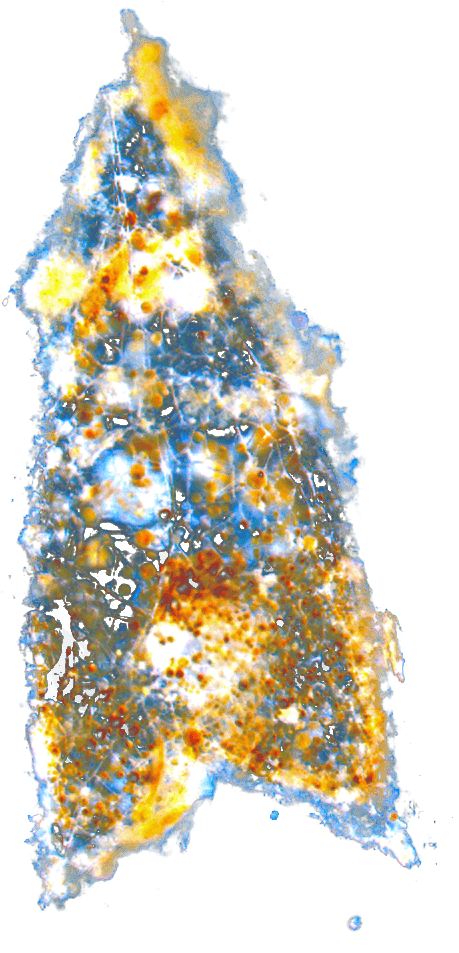
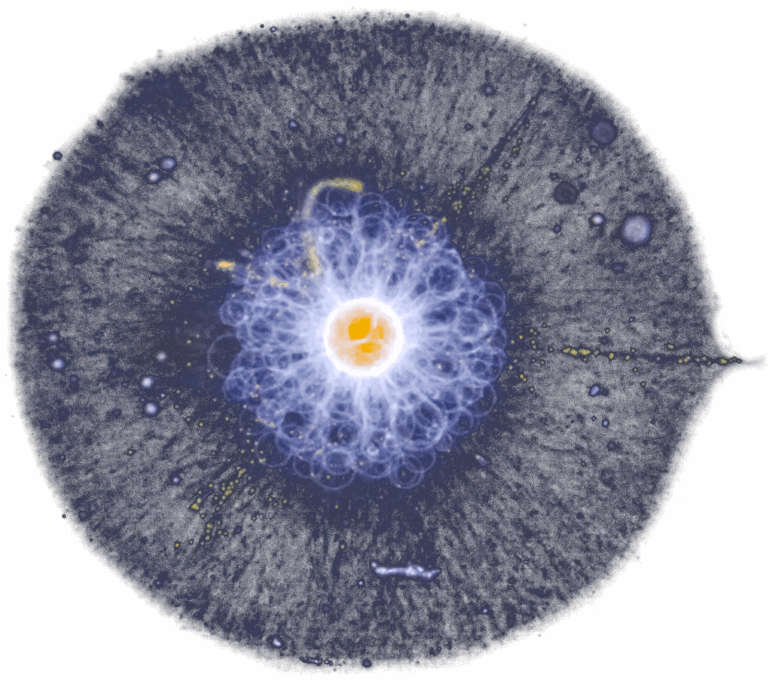
Our recent global model for Rhizaria distribution (Laget al., 2024) suggests that the highest values of Rhizaria biomass are reached in the Southern Ocean.
In particular, this biomass is maximum below 200 m, suggesting that Rhizaria could play major roles in this layer, connecting the surface to the deep ocean. As the Southern Ocean is deeply structured by oceanic fronts, we expect to find major biogeographical patterns between the different ecoregions created by these fronts. This is suggested by the differences found in the seafloor sediments of the Southern Ocean. In some locations, Rhizaria can even be the dominant facies found in sedimentary fossil records. Historical sediment cores collected during the Conrad expeditions (1964, 1964, 1971 and 1974), now stored at the Lamont-Doherty Earth Observatory, provide a testimony to further explore the fate of Rhizaria in this region. In these cores, Rhizaria can be the dominant facies despite diatom biomass orders of magnitudes larger at the surface.
If Rhizaria are not the most abundant siliceous organisms in this region, how can they be the dominant facies in the fossil record?
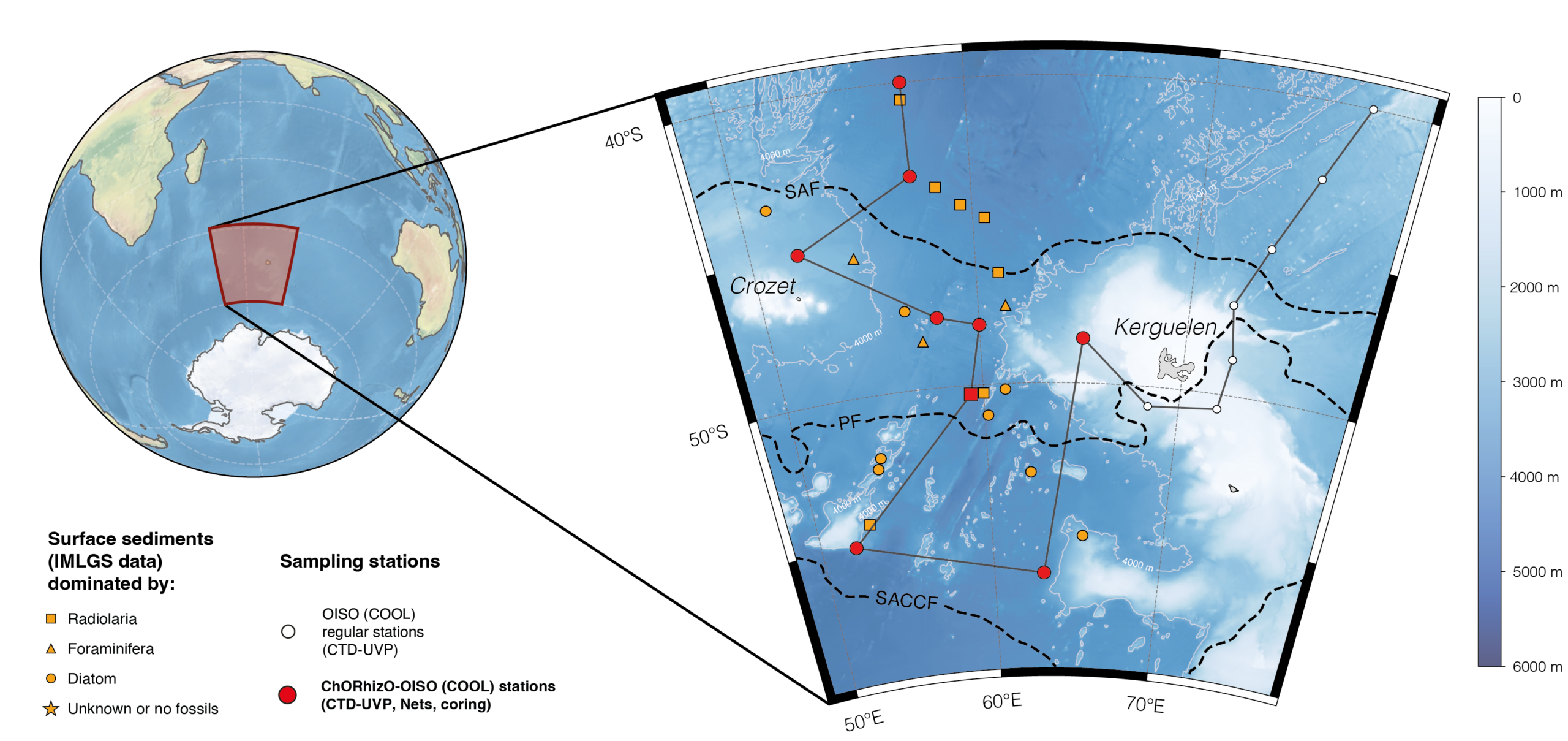
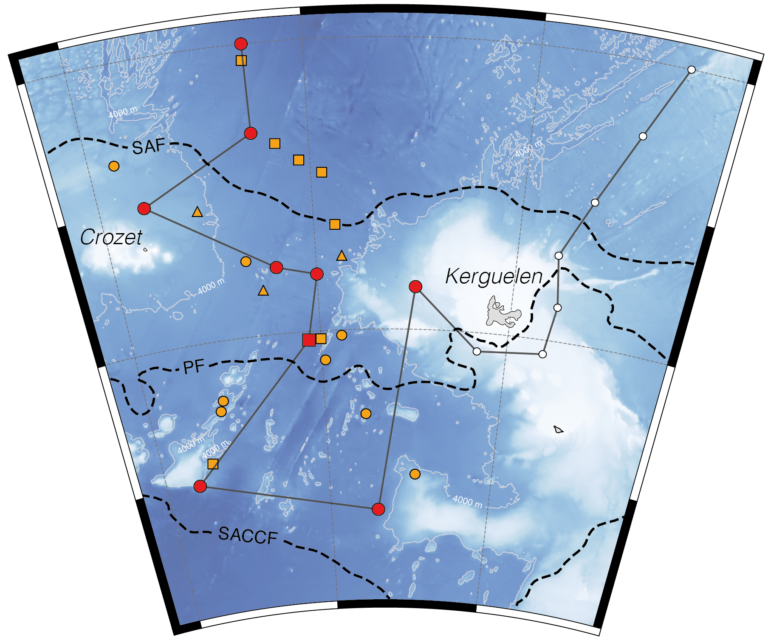
In the Southern Ocean, our main sampling area will be located at the vicinity of the two French Island of Crozet and Kerguelen. These two islands are permanently inhabited, in particular for research purposes.
Our oceanagraphic cruises there will take place onboard the N/O Marion Dufresne. This ship insure rotations to the French island while being available for research purposes.
During the first (long) oceanographic cruise, we will be crossing major oceanic fronts structuring this area: the Subantarctic Front (SAF), the Polar Front (PF). With the southernmost sampling stations, we will get close to the Southern Antarctic Circumpolar Current Front (SACCF).
The Vision Mooring will be deployed near the Polar Front (50°S – 60°E), northeastern from the Conrad Seamount and halfway through Crozet and Kerguelen.
In collaboration with OISO
To explore the Southern Ocean and understand the importance of Rhizaria there, ChORhizO will benefit from the French research observatory OISO (Indian Ocean Observation Service). Since 1997, this observatory and the associated oceanographic cruises have studied the area around the French islands of Kerguelen and Crozet. They provided a wealth of ancillary data that will help expand the measures from ChORhizO.
Two contrasted locations:
Southern Ocean
Mediterannean Sea
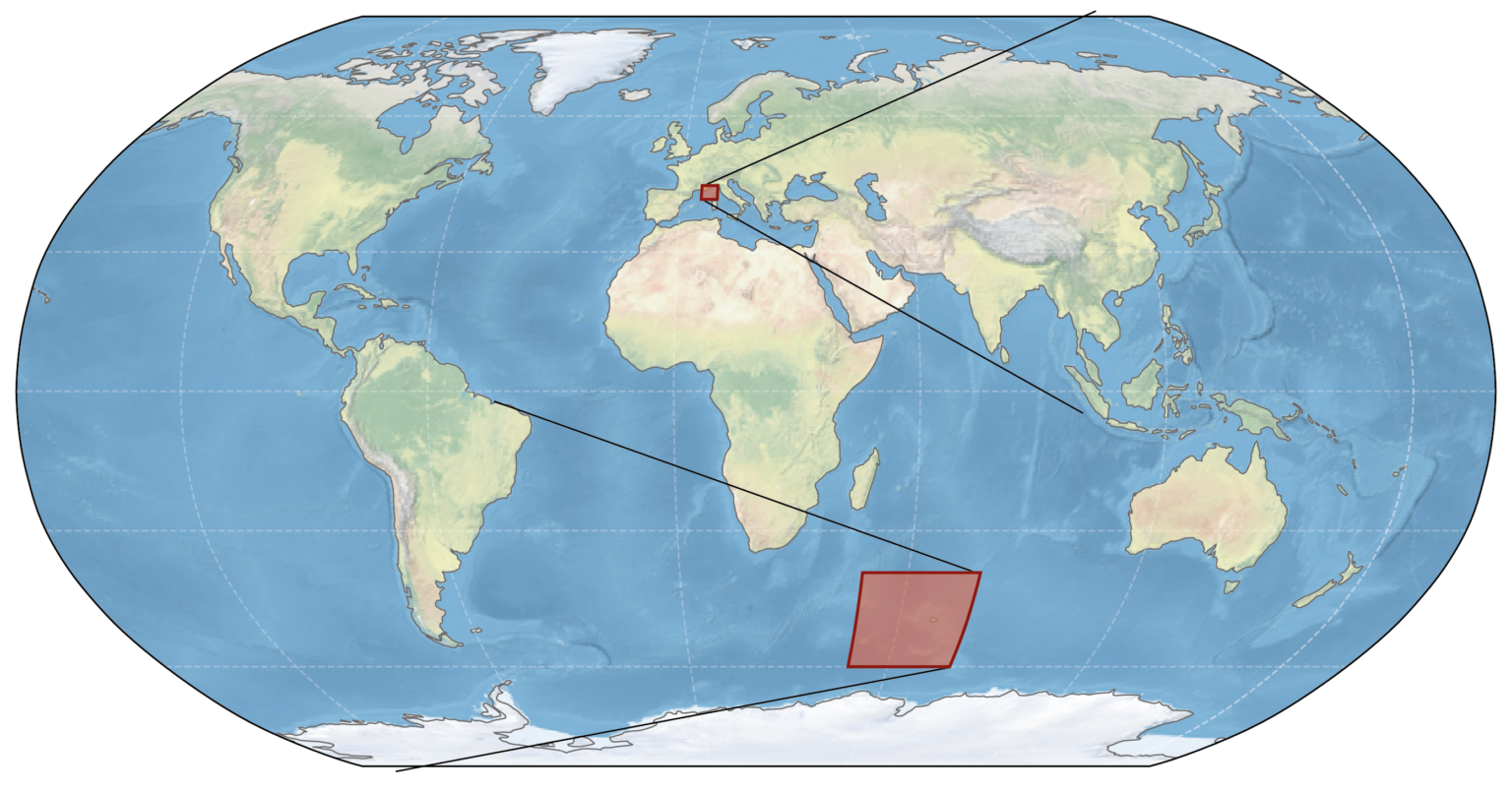
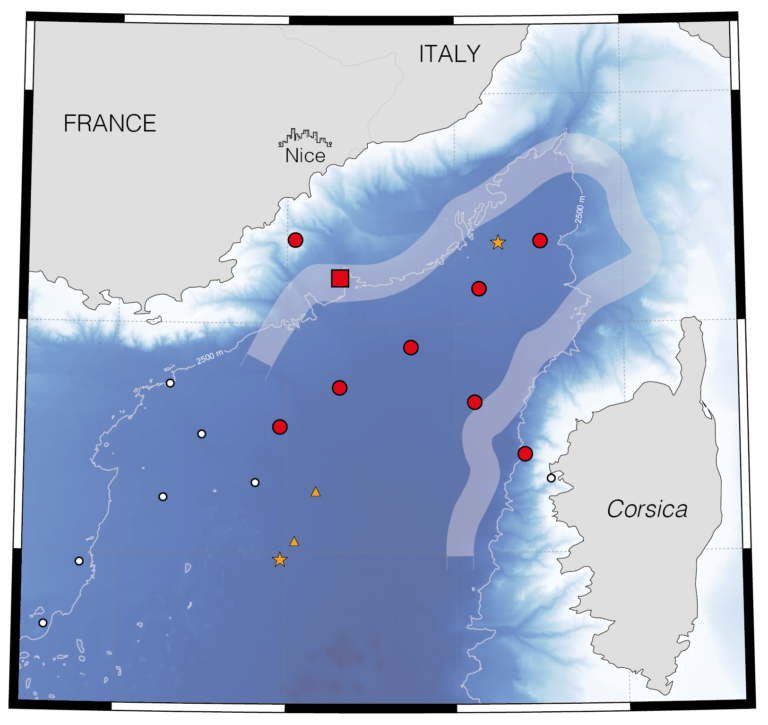
The ChORhizO project will unfold across two carefully selected study sites distinguished by their Rhizaria communities, biogeochemical regimes and the presence of existing sedimentary fossil records.