

Our Objectives
Why this project
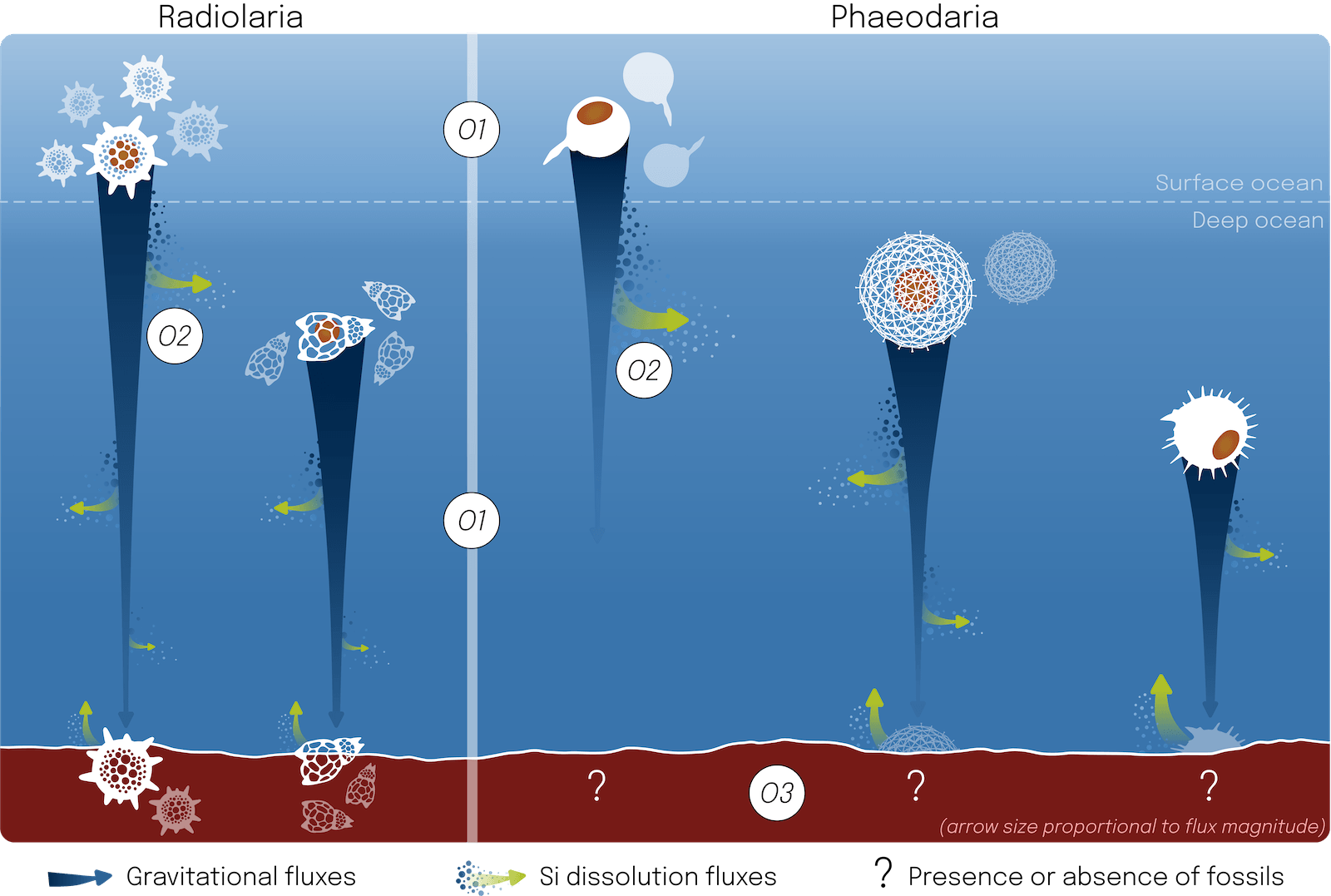
For 550 million years, biomineralising plankton have populated the ocean. Upon death, their skeletons eventually reach the seafloor and fossilise, recording an image of their environment for millennia. However, we ignore which populations actively contribute to the creation of fossils. To identify them and the associated mechanisms preceding fossilisation, we need to quantify diverse water column processes: the different living populations, their stocks, growth rates and downward fluxes. Elucidating the interplay between living populations and their reflection as fossils will inform us about the magnitude of present biogeochemical fluxes. We will know exactly when and which populations can sequester specific amounts of inorganic material in the sediments.
Of all planktonic lineages found in the ocean, the most appropriate choice, yet the most challenging, should be a group with the following attributes: an extended range of sizes (i.e., small and larger cells with putatively different sinking speeds), a large diversity of shapes (i.e., different resistances to chemical alteration) and habitats (i.e., different populations in the water column). For these reasons, ChORhizO will focus on an ancient and ubiquitous group of biomineralising plankton, with newly-recognised importance in modern oceans: Rhizaria.
Over the past decade, we found that Rhizaria constitute 33% of the stock of large zooplankton worldwide (Biard et al., 2016). We identified that Rhizaria should remain important organisms in future warming oceans due to their ubiquity and variety of trophic modes. However, most of these recent findings only refer to large Rhizaria (>600 μm) while there are smaller species, comparatively more abundant. Despite such high stocks, we still ignore whether their downward gravitational fluxes are proportionally as important.
During this last decade of research on Rhizaria, our group put the spotlight on their importance in modern oceans. Rhizaria may emerge as new model organisms for the next generation of ocean sciences researchers. However, numerous unknowns remain. To move beyond the current state of knowledge, it is necessary to undertake a large interdisciplinary project with one overarching goal: quantifying the role of Rhizaria in modern oceans, extending from the surface to the seafloor, over their entire diversity, from living cells to fossils.
What are Rhizaria?
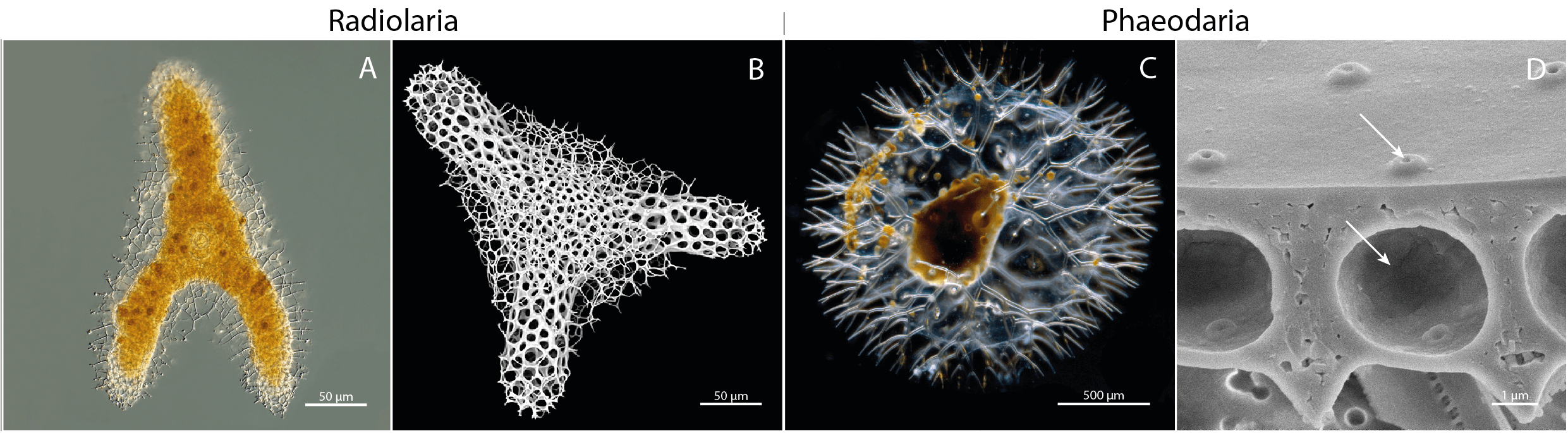
Rhizaria form an eukaryotic supergroup of unicellular organisms commonly found in marine environments. Appeared in the early Cambrian (ca. 515 Mya), they represent one of the oldest groups of plankton known to date. Nowadays, marine Rhizaria contain mostly planktonic forms, almost exclusively heterotrophic (i.e., zooplankton). They are mostly known and recognised by their complex mineralised skeletons. While some use CaCO3 (i.e., Foraminifera) or SrSO4 (i.e., Acantharia), Radiolaria and Phaeodaria biomineralise Si into intricate skeletons, with sizes varying from a few dozen microns to several millimeters.
ChORhizO will focus on planktonic siliceous Rhizaria only (hereafter ‘Rhizaria’). They have a wide range of morphologies, from hollowed-spicules (for Phaeodaria) to solid spherical or conical skeletons (for Radiolaria). This large morphological diversity mirrors the vast diversity of ecosystems they inhabit. While many Radiolaria live in the surface layers of the oceans, Phaeodaria typically inhabit the deep ocean. With both populations ubiquitously distributed from polar to tropical regions, Rhizaria are typical open-ocean organisms. Given their prevalence in the oceans and the complexity of their skeletons, they have always attracted attention since the early era of oceanography (e.g., the work of Ernst Haeckel).
Our main objectives
1 – Quantify the variability of Rhizaria stocks and diversity through space (i.e., habitats) and time (i.e., seasons), by using various plankton nets and in situ imaging systems.
2 – Determine by which pathways (i.e., gravitational, dissolution, etc.) Rhizaria stocks are exported to the deep ocean and ultimately fuel fossils thanks to a combination of various sediment traps.
3 – Characterize fossils and quantify taphonomic processes enabling or precluding Rhizaria fossils.
The strategy
Oceanographic cruises
The ChORhizO project relies on intensive fieldwork spread across different locations (i.e., Mediterranean Sea and Southern Ocean) through the five years of the project. The core fieldwork of ChORhizO will involve six oceanographic cruises (two long and four short). The long cruise will occur between 2027 and 2028. They will involve dozens of fixed sampling stations distributed across the frontal areas of the Antarctic Circumpolar Current and Ligurian Sea. Sampling in frontal regions will enable us to consider contrasting conditions (i.e., ecoregions) in highly dynamic ecosystems, where Rhizaria can be more abundant. These sampling stations will match the regular OISO and MOOSE-GE observatory locations to minimize the project’s carbon footprint and maximise the potential for comparison with ancillary data.
Multidisciplinary sampling techniques
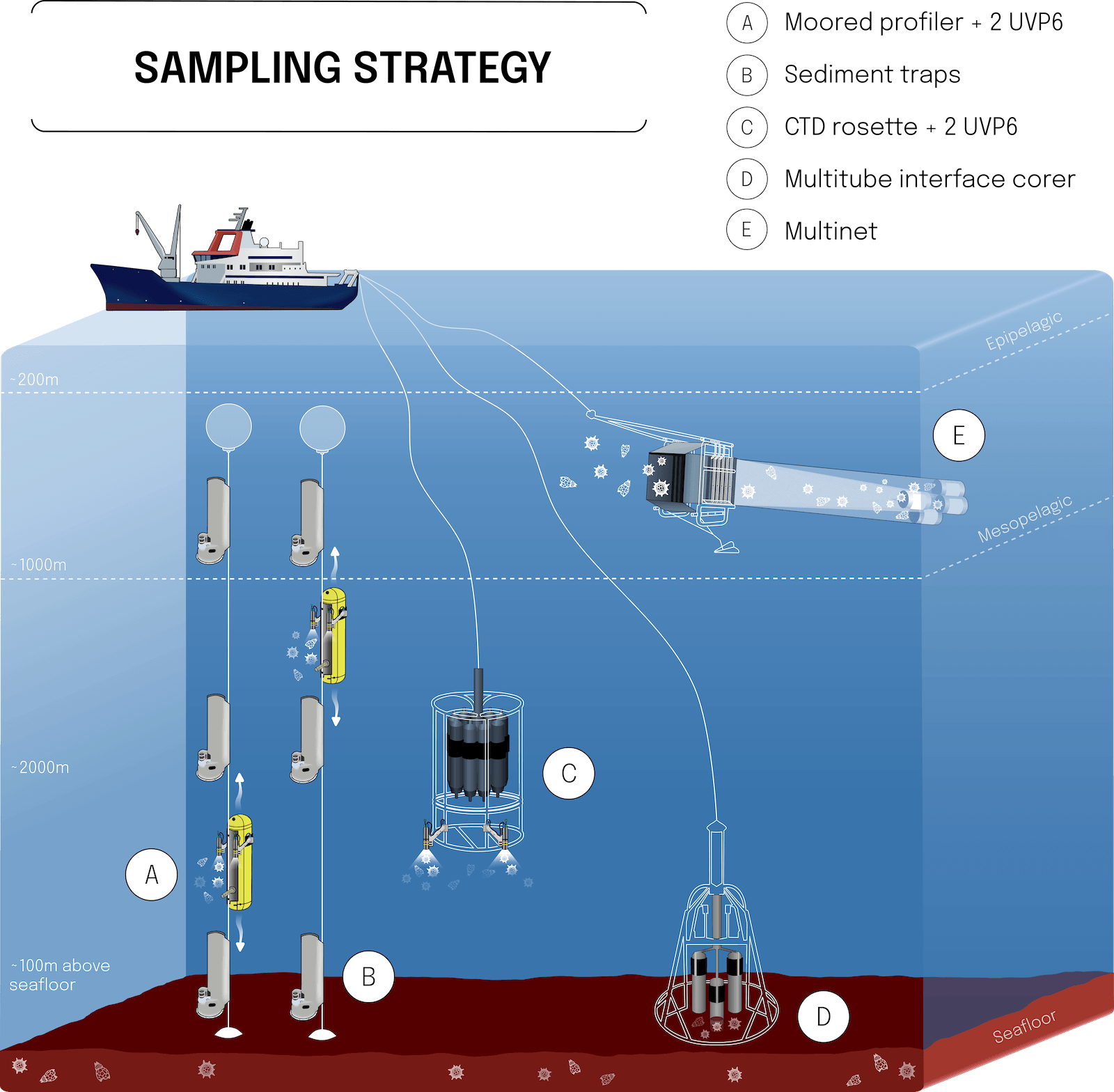
A - The McLane Moored Profiler (MMP)
The McLane Moored Profiler (MMP) is an in situ platform capable of autonomously profiling between two depths while carrying three oceanographic sensors: (1) a Seabird 52MP CTD, measuring Temperature, Density and Conductivity; (2) an Underwater Vision Profiler 6 low frequency (UVP6 lp), quantifying particle and plankton abundance and diversity by capturing in situ images from 600 µm to several centimeters; (3) an Underwater Vision Profiler 6 micro (low frequency – UVP6m lp), the latest version of the UVP family, capable of doing the thing as the UVP6lp but for smaller particles down to ~100 µm.
The MMP, equipped with these three sensors, will be clamped to the mooring’s cable and profiles at ~25 cm/sec. During ChORhizO, pairs of MMP will be used together to profile almost all of the water column three to five times a week, for the duration of the mooring’s deployment (i.e., 1 year). With the unique combination of sensors and in situ capabilities, we will be able to monitor autonomously Rhizaria diversity and stocks through depths and seasons.
B - Sediment traps
Sediment traps will be used to collect gravitational downward fluxes at different depths (from the sub-surface to the near seafloor). A combination of traps will be used, from classical time-series sediment traps (the French conical trap PPS5 and PPS4/3) to newly designed time-series gel traps. As Rhizaria can be highly susceptible to in situ dissolution of their silicified skeleton, the use of polyacrylamide gels could help preserve such skeletons over long periods of time. As part of the CNRS-funded GRATIS-TWO project, together with the Technical Division of the INSU, we are currently developing a new generation of sediment traps which will enable the use of gels, collecting particles for 15-30 days, over a period of one year. This unique combination of sediment traps will provide a look into the overall gravitational fluxes of Rhizaria through depths and seasons.
C - A multi-sensor rosette sampler
A multi-sensor rosette sampler will be used for each of the fixed sampling stations during the long cruises. The rosette will be systematically lowered down to the seafloor to have full vertical resolution. As a standard instrument for oceanographic expedition, our rosette will carry a unique combination of sensors : (1) an unprecedented combination of UVP6 and UVP6m (see above), both in high-frequency versions, allowing for a continuous quantification of Rhizaria diversity and stocks throughout the vertical cast; (2) standard CTD, oxygen and PAR sensors. With this combination of sensors, we will determine where, and in which abiotic conditions, Rhizaria thrive.
In addition to the previously mentioned sensors, the standard Niskin bottles will enable quantification of inorganic core-elements (i.e., N, P, Si, etc…) concentrations at discrete selected depths.
During specific casts, standard Niskin bottles will be replaced with a maximum of 7 Deepnets that will be used simultaneously. Deepnets (similar to Bottle nets) are modified Niskin bottles where a 20 μm mesh plankton net is fitted. They allow a quantitative approach to collecting vertically stratified samples during a rosette cast. Deepnets will be used for two purposes: collection of specimens for experimental analyses (see “Single-cell analyses” below) and quantification of Rhizaria abundances. To achieve this quantification, we will be using the PlanktoScope imaging system to investigate Rhizaria whose sizes range from 20 to 300 µm.
D - Multitube interface corer
Multitube interface corer to investigate Rhizaria fossil assemblages in quaternary surface sediments (30 to 60,000 years old sediment). A Fantacore interface corer will be used, allowing collection of four 1m-long cores (90 mm diameter) at each of fixed sampling stations during the long cruises. Diversity of microfossils will be investigated using automated Scanning Electron Microscopy and deep-learning techniques for taxonomical identifications. Evidence of altered Rhizaria skeletons, in particular Phaeodaria, will be sought in the superficial water collected with each core. Concentrations of dissolved Si (dSi) will be quantified here (and throughout the water column) to determine whether dSi concentrations are maximal at this sediment interface due to the dissolution of Rhizaria skeletons. As part of the ANR-funded part, Rhizaria diversity will also be investigated from ancient DNA in surface sediments. DNA-based approaches also referred to as “omics”, offer a powerful alternative for extracting detailed taxonomic information from complex or partially degraded specimens and even long-dead organisms without facing the problem of morphological degradation.
E - Plankton nets
Plankton nets are required to collect as many Rhizaria specimens as possible (see “Single-cell analyses” below) but also to quantify Rhizaria diversity and stocks, complementary to their in situ quantification made with the UVP6. We will deploy simple WP2 plankton nets, with or without a closing system, but also more complex multinets (i.e., Hydro-Bios MultiNet). They will allow vertically-stratified collection of Rhizaria and plankton samples, to determine how vertically-stratified Rhizaria populations are. Formalin-fixed samples will be analysed with a ZooScan imaging system in the months following the cruise end.
The technological breakthrough of the Vision Mooring
What makes the Vision mooring innovative?
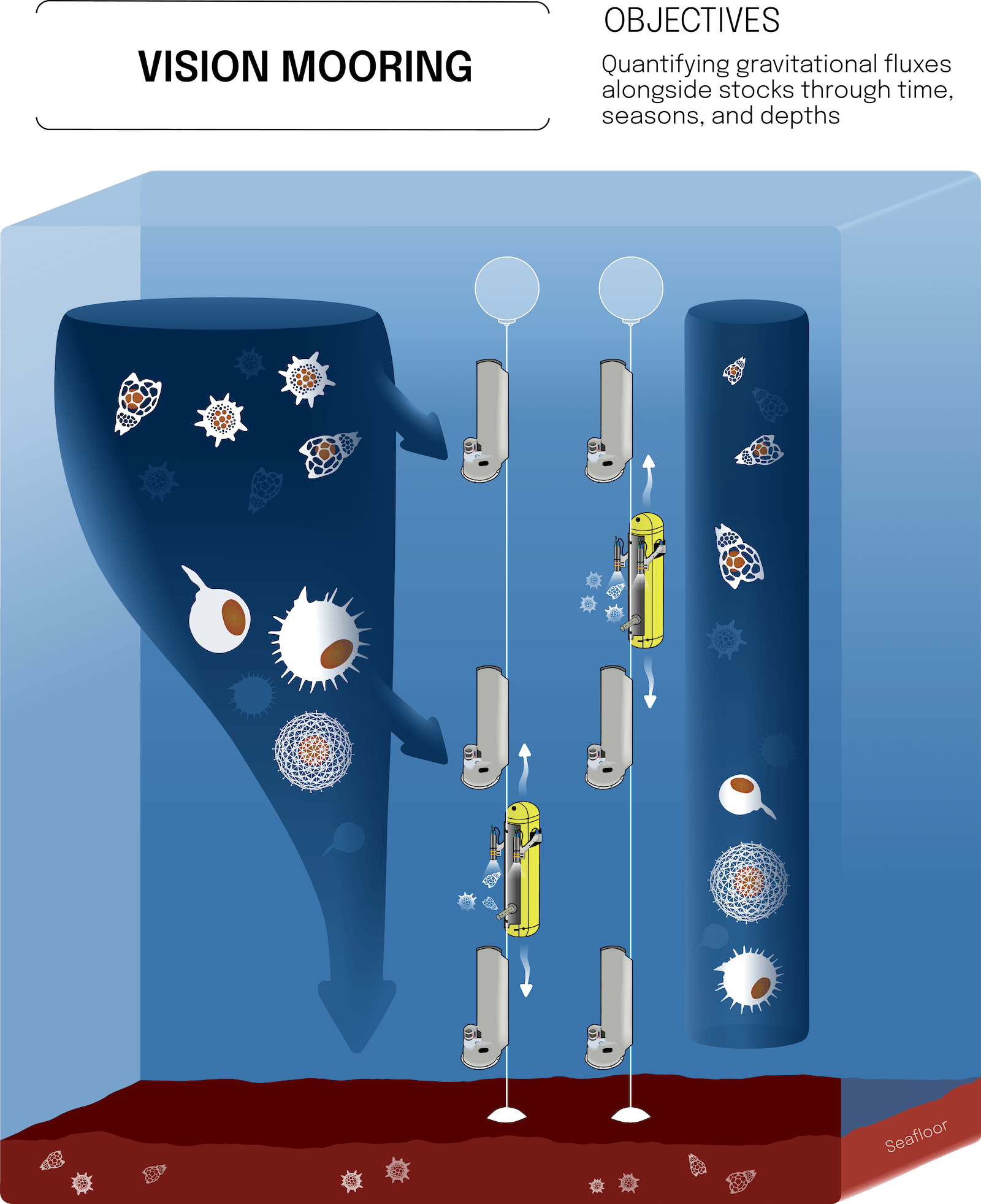
Traditionally, the means of quantifying plankton abundances (e.g., with nets or cameras) and gravitational fluxes (e.g., with sediment traps) are temporally separated, particularly in studies that span multiple months or years. This implies that sediment traps are usually deployed for several months to measure fluxes without any quantification of concomitant planktonic stocks. To determine the fraction of living populations actively contributing to gravitational fluxes, these measurements must be made concurrently.
Each Vision mooring will accommodate three pairs of sediment traps, distributed from the sub-surface to the seafloor to monitor gravitational fluxes (15-30 days interval) exported from the sub-surface to the seafloor. Each pair will be composed of a mass-trap and a gel-trap. The mass-trap (i.e., standard time-series traps) will collect gravitational fluxes of particulate organic matter in collection cups. In parallel, we will use sediment traps equipped with polyacrylamide gels (= gel-traps). Each Vision mooring will accommodate one to two McLane Moored Profiler equipped with CTD and two UVP6 cameras.
By achieving this unprecedented parallel sampling of stock and fluxes, the Vision mooring has potential to revolutionise the methodological approaches to studying ocean biogeochemistry. This is a rare occurrence since the standards set by the Joint Global Ocean Flux Study program. Before the Vision mooring, time-series moorings were only capable of sampling fluxes through extended periods. Plankton and particle stocks could be estimated remotely by means of in situ imaging but not through the water column. This new mooring design will enable a direct in situ investigation of plankton populations, their stocks and temporal dynamics, now throughout the water column.
Biogeochemical characterisation of Rhizaria at the cellular level
How Silicon and Carbon are transformed
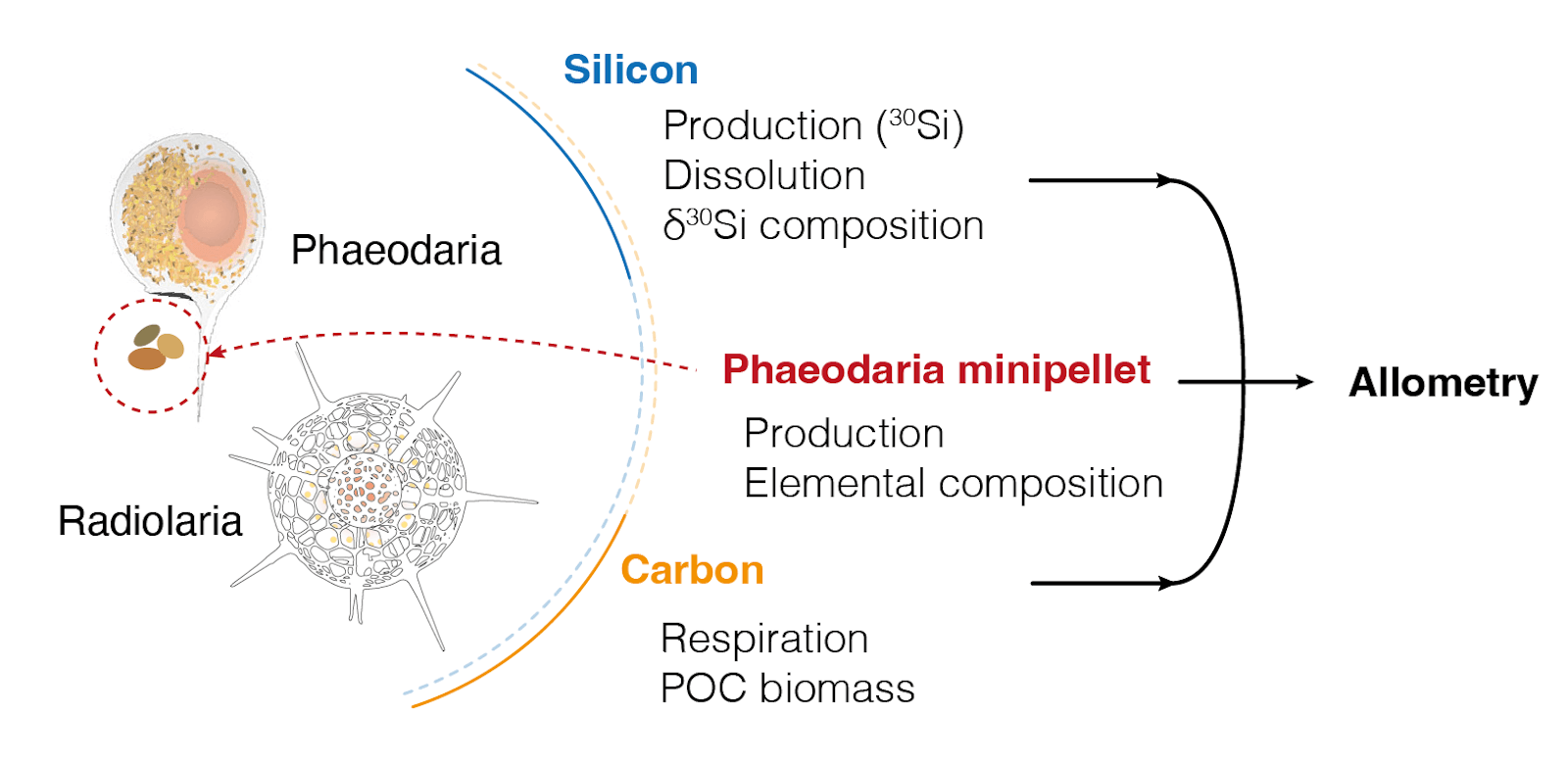
To determine how fast Rhizaria populations can grow and their Si content dissolve, we need to work at the scale of individuals. Despite significant progress made in the past decade, several key processes are still undocumented or lacking sufficient data to achieve our objectives. Specifically, we will experimentally quantify the cellular processes involved in the transformation of carbon and silicon.

Silicon production rates
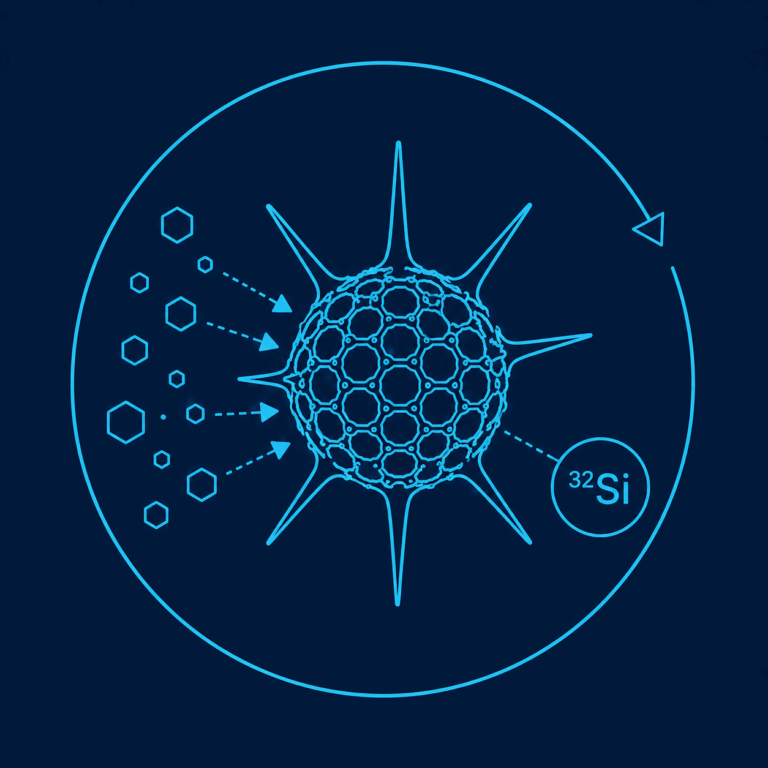
The 32Si radioisotope to measure Rhizaria silicon production rates has been pioneered by the Laboratory of Environmental Marine Sciences (LEMAR, France). Despite the application of this protocol to a diversity of Rhizaria and a significant weak correlation between silicon production and Rhizaria biovolume (Laget et al., 2023), we still do not understand the basic kinetics of Si biomineralisation. We will keep on measuring silicon production rates, over the most extended range of size (covering the size-spectra acquired with the in situ imaging cameras).
Silicon dissolution rates
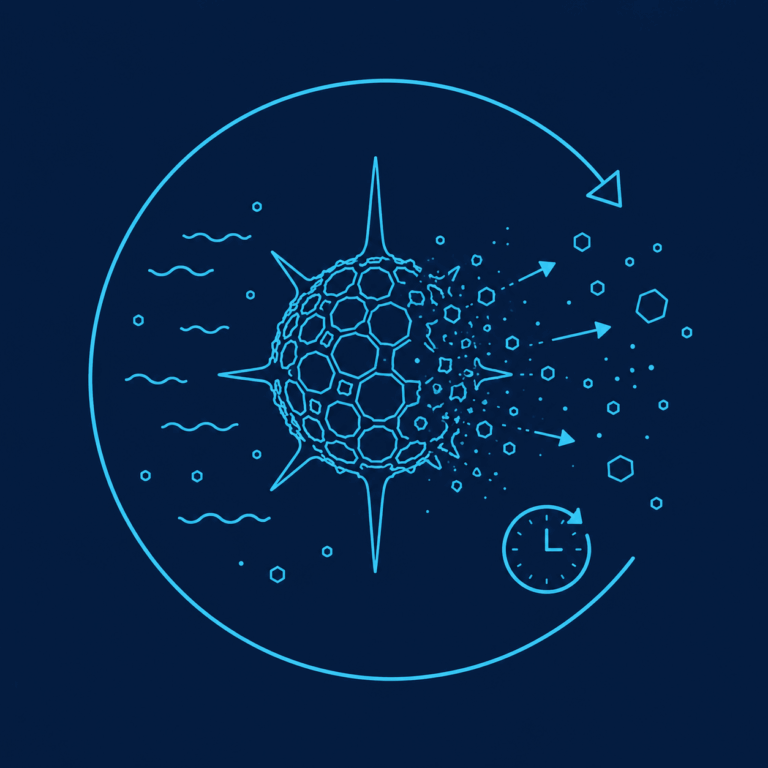
Despite a qualitative assessment of Si dissolution susceptibility measured four decades ago (Erez et al., 1982), we ignore how fast Rhizaria skeletons ca be dissolved. For the first time, we will measure the key taphonomic process explaining why some Rhizaria, in particular Phaeodaria, are absent from sediment traps and fossil records. We will replicate and adapt previously described protocols developed for diatoms, by incubating dead specimens and tracking the evolution of dissolved silicon concentration over time.
Silicon stable isotopes
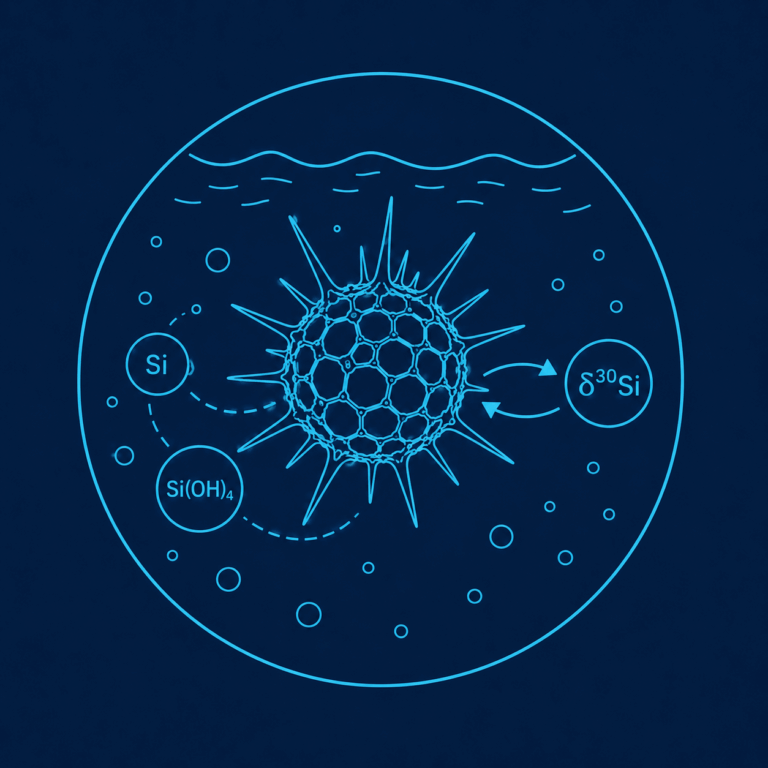
The determination of the δ30Si composition of bSi from organisms such as diatoms, siliceous Rhizaria, and sponges and their surrounding seawater allows us to quantitatively define the flux of Si by these organisms throughout the entire water column in the marine environment. This task will specifically be carried out for the ANR-funded project.

Phaeodaria Minipellets
We will search for evidence of minipellets production, by screening the most extensive diversity of phaeodarian species, and determine whether it is a common feature. For the first time, we will attempt to minipellets excretion rates using a combination of techniques, including the experimental device SNOWMAN. It enables the production of marine snow aggregates from natural phytoplankton populations, which are inserted in a rotation tank. Excreted minipellets will be collected and used for 1) elemental quantification of carbon and silica contents, and 2) for microscopy analyses of their contents, in order to distinguish food remains (e.g., diatom frustules).

Oxygen consumption rates
Oxygen consumption rates are used to define zooplankton food demand and growth. Such information is lacking for silicified Rhizaria but has been acquired for other planktonic Rhizaria (e.g., Foraminifera). Following the protocol applied to these other Rhizaria, respiration rates will be measured on freshly collected silicified Rhizaria.

Allometry
As Rhizaria sizes span several orders of magnitude, we need to investigate how the above processes change with size. The intimate relation between biological processes and cell size can be mathematically described as allometric relationships. Our team has provided the only allometries between Rhizaria cellular volume and silicon or carbon contents. To elaborate new allometric scaling for each process, quantitative elemental measurements will be systematically recorded along with morphological features (e.g., length, etc.). These new allometries will enable reconstructing global estimates of Rhizaria Si production and dissolution, using the extensive collection of in situ images that will be produced during this project.

