
Our actions in the
Mediterranean Sea
In the Mediterranean Sea, the presence of Rhizaria in the water column and in surface sediments is radically different. Although our recent global model for Rhizaria distribution (Laget al., 2024) suggests large Rhizaria biomasses in the Mediterranean Sea, this region is much less productive than the Southern Ocean.
It implies that weaker gravitational fluxes can limit population growth of Rhizaria. Yet, in the water column, both at the surface and in deep layers, Rhizaria have been abundantly found, particularly near the frontal zone of the Ligurian Current (Panaïotis et al., 2024). Surprisingly, despite the large abundance of Rhizaria, there are barely any siliceous fossils on the Mediterranean seafloor. To further complicate our understanding of the fate of Rhizaria, only four sediment cores have been archived in the Ligurian Sea. This limits our ability to provide insights in the unlikely presence of Rhizaria.
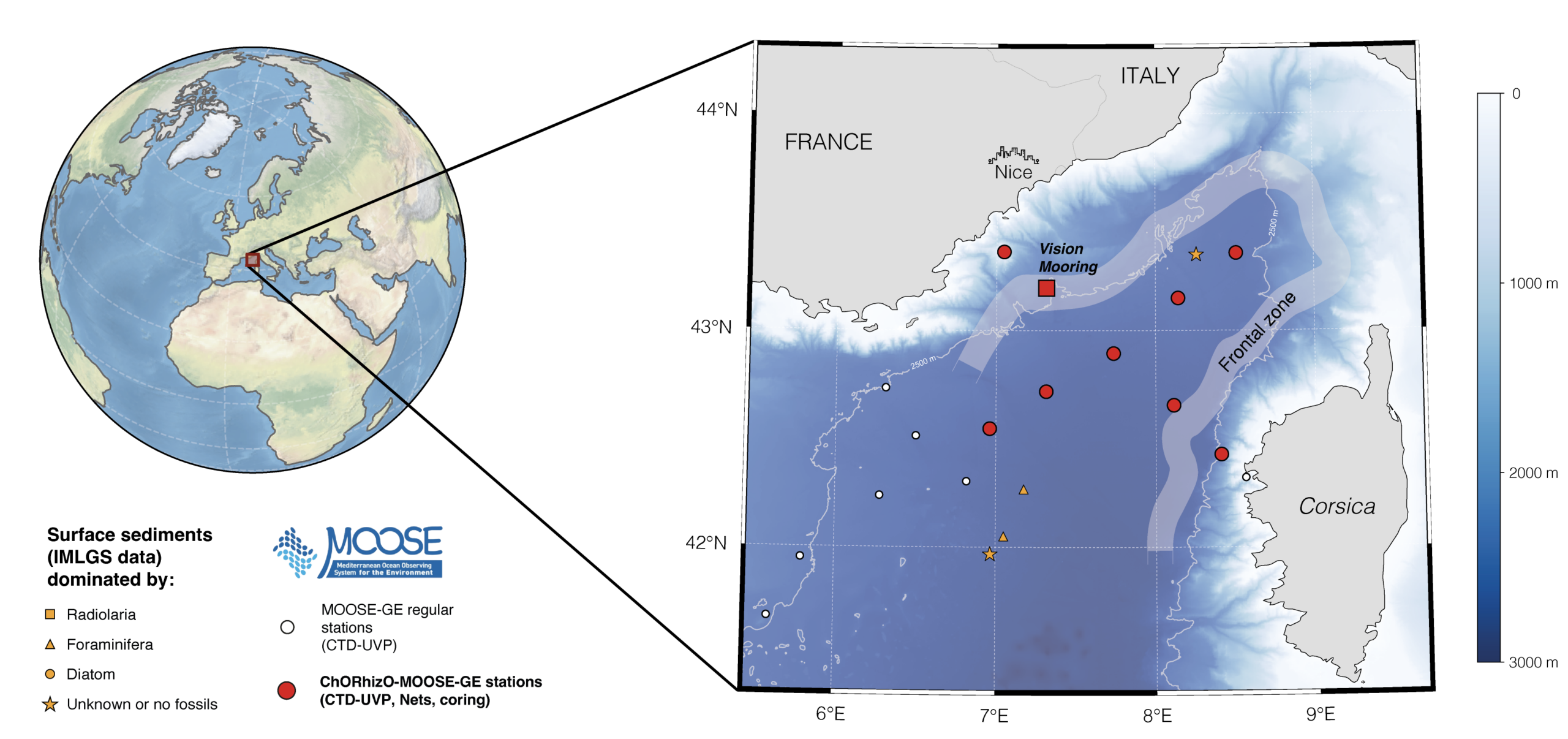
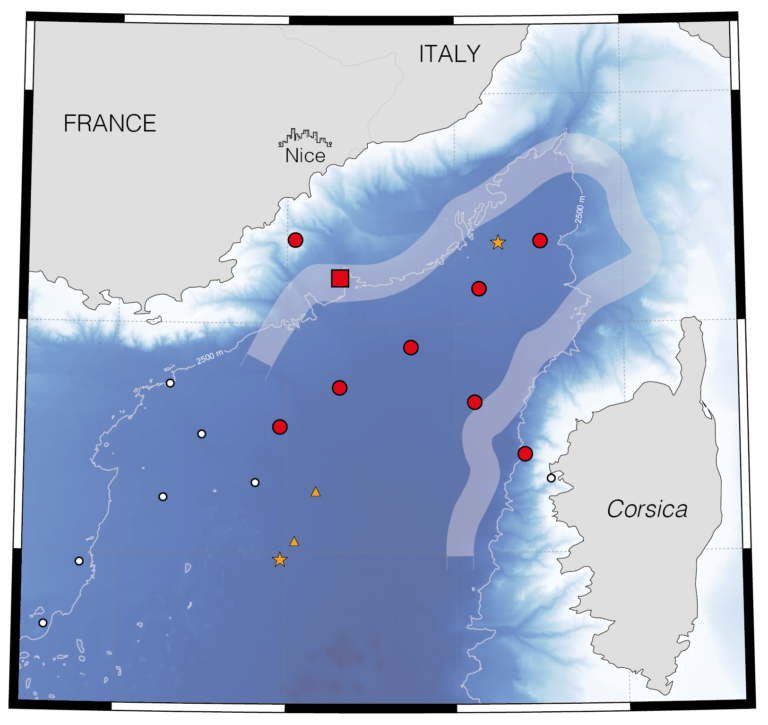
During one of the MOOSE-GE summer cruise, we will sample the regular MOOSE-GE sampling stations located in the Ligurian Sea, between France and Corsica. It will allow us to explore (likely different) Rhizaria communities spread across the frontal zone create by the Ligurian Current.
The Vision Mooring will be deployed in the frontal zone of the Ligurian Current, next to the DYFAMED mooring.
In collaboration with

To explore the Mediterranean Sea and understand the importance of Rhizaria there, ChORhizO will benefit from French research observatory MOOSE (Mediterranean Ocean Observing System for the Environment). Since 2010, this observatory and the associated oceanographic cruises have studied the northwestern coast of the Mediterranean. They provided a wealth of ancillary data that will help expand the measures from ChORhizO.
Two contrasted locations:
Southern Ocean
Mediterannean Sea
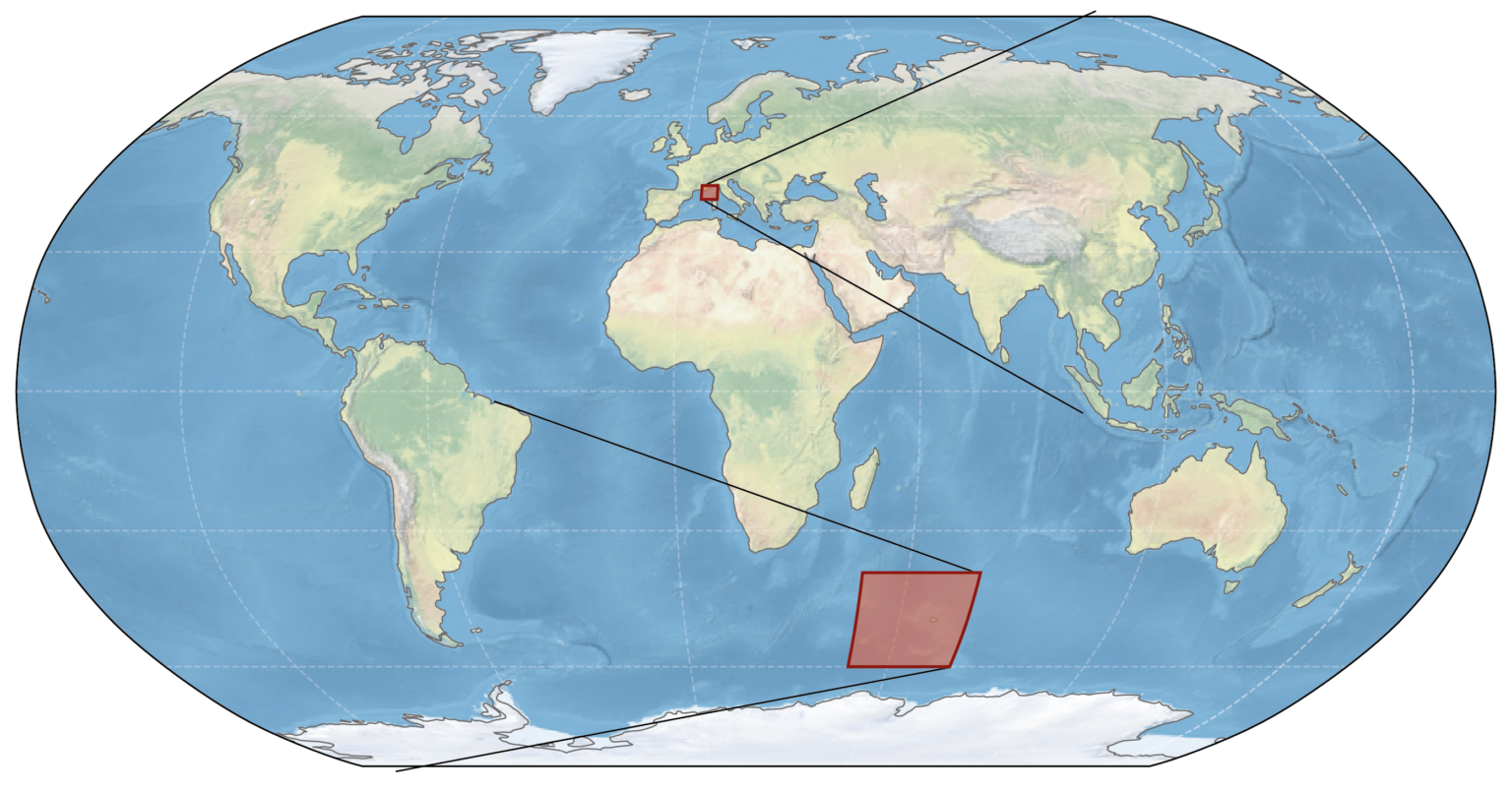
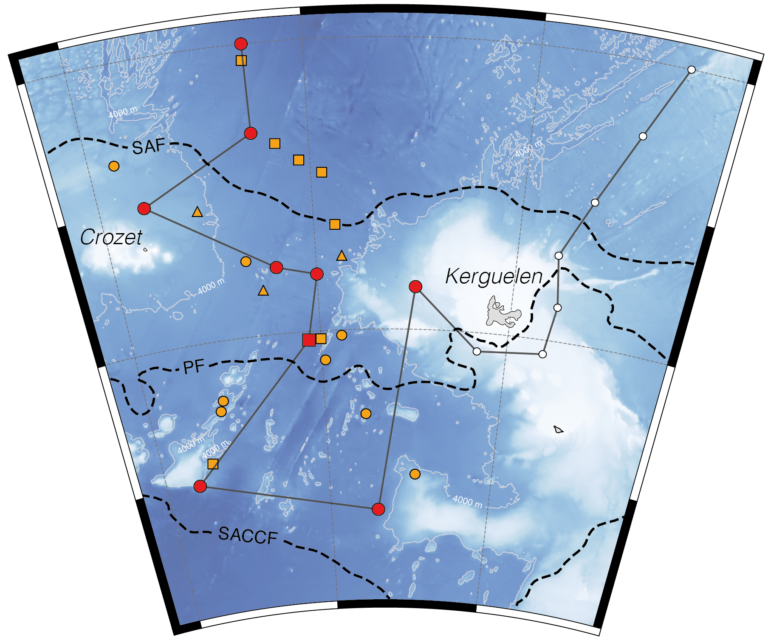
The ChORhizO project will unfold across two carefully selected study sites distinguished by their Rhizaria communities, biogeochemical regimes and the presence of existing sedimentary fossil records.